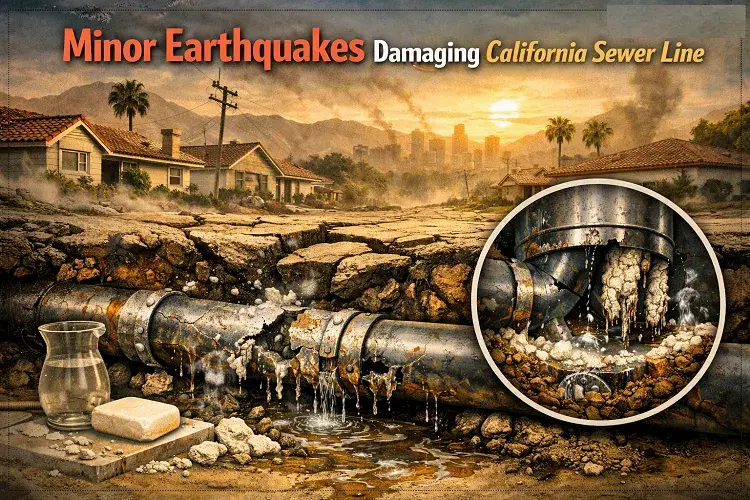
Living in California means accepting a certain level of geologic reality. We all know what to do during a major earthquake, and we actively prepare our homes for the “Big One.” But while you are strapping your bookshelf to the wall and securing your television, there is a silent, slow-moving disaster happening directly beneath your feet.
You do not need a massive 6.0 magnitude earthquake to cause catastrophic damage to your home. In fact, it is the tiny, almost unnoticeable micro-tremors that happen every single week across the San Andreas and Hayward fault lines that are slowly destroying your plumbing.
Specifically, these minor tremors are shifting the dirt around your home and actively crushing your main sewer line.
If you have noticed a foul odor in your yard, if your toilets are gurgling, or if your showers are draining slowly, you might already be the victim of seismic plumbing damage. In this guide, we will explain exactly how the California ground is destroying your pipes, the most common broken sewer line symptoms to watch out for, and how modern trenchless sewer repair can save your yard from being excavated.
The Underground Problem: Shifting Soil and Old Pipes
To understand why your sewer line is so vulnerable to earthquakes, you have to look at how homes were built during California’s massive post-war housing boom.
If your home in Los Angeles, the Bay Area, or San Diego was built before 1980, there is a very high probability that your main sewer line—the single pipe that carries all the wastewater from your home to the city sewer—is made of clay or cast iron.
The Vulnerability of Clay and Cast Iron
Vitrified clay pipes were the standard for decades because they do not rust. However, clay has one massive structural flaw: it is completely rigid and highly brittle. It has zero flexibility. Cast iron, while stronger than clay, suffers from the same lack of flexibility and actively rusts from the inside out over decades, making the pipe incredibly fragile.
The Seismic Shift
When a minor fault line tremor occurs (even a 2.5 magnitude quake that you sleep right through), the earth beneath your home shifts. The soil compresses, settles, and moves.
Because your clay or cast iron sewer line has absolutely no flexibility, it cannot bend with the moving earth. As the soil shifts downward or pushes upward, immense pressure is applied directly to the rigid pipe.
Eventually, the pipe simply snaps under the pressure. The joints pull apart, or the brittle clay shatters. This doesn’t happen all at once; it is a slow process of micro-fractures that widen over years of continuous tectonic movement.
The 4 Major Broken Sewer Line Symptoms
Because your sewer line is buried three to six feet underground, you cannot visually inspect it for earthquake damage. You have to rely on secondary symptoms.
If you experience any of the following four broken sewer line symptoms, your underground pipe has likely cracked or collapsed:
1. Frequent, Unexplained Drain Backups
If one toilet clogs, you likely just have a localized blockage. But if your kitchen sink, your guest bathroom toilet, and your master shower are all backing up at the same time, the blockage is in the main sewer line.
When the pipe cracks due to seismic shifting, the earth falls into the pipe and creates a massive dam of mud, preventing wastewater from leaving your home.
2. Lush, Unusually Green Patches of Grass
This is one of the most obvious visual signs of a broken sewer line. Wastewater acts as a highly potent fertilizer. If your front lawn is mostly brown and dry, but you suddenly have one specific patch of grass that is incredibly lush, green, and growing twice as fast as the rest of the yard, there is a very high probability that your sewer line is leaking raw sewage directly into the soil below that patch.
3. The Smell of Sewage
Your plumbing system is designed with “P-traps” and roof vents specifically to keep sewer gases out of your living space. If you are constantly smelling a foul, sulfurous odor (like rotten eggs) inside your home, in your basement, or lingering over your front yard, your main sewer line has ruptured and is venting toxic gas into the surrounding dirt.
4. Gurgling Noises from the Drains
Your plumbing system requires air to flow smoothly. When a sewer line collapses or fills with mud from a crack, air becomes trapped in the pipes. When you flush a toilet or run the washing machine, this trapped air is violently forced back up through the water in your P-traps. If you hear a “gurgling” or “bubbling” noise coming from your bathtub drain when you flush the toilet, your main line is severely compromised.
The Threat of Tree Roots
When an earthquake causes a micro-fracture in your clay sewer pipe, it creates a secondary disaster: root intrusion.
The soil in California is often dry, and the massive trees in your neighborhood are constantly searching for moisture. A tiny hairline crack in a sewer pipe releases warm water vapor into the surrounding dirt. Tree roots are naturally drawn to this moisture.
Hair-thin roots will force their way into the tiny crack created by the earthquake. Once inside the pipe, they have access to a constant supply of water and fertilizer. The roots will rapidly grow into a massive, thick web that completely chokes off the pipe. As the roots grow thicker, they expand, completely shattering the rest of the clay pipe.
Immediate Action: The Fiber-Optic Camera Inspection
If you are experiencing any of the broken sewer line symptoms listed above, you are on a ticking clock. If a cracked pipe is left untreated, it will eventually collapse entirely, resulting in raw sewage flooding back up into your bathtubs and causing tens of thousands of dollars in biological water damage.
You must stop pouring drain-clearing chemicals down the sink (which will not fix a collapsed pipe) and call a licensed local plumber immediately to perform a Fiber-Optic Sewer Camera Inspection.
A licensed plumber will feed a high-definition, waterproof camera attached to a flexible cable directly into your main sewer line. This takes the guesswork out of the repair. The plumber will be able to show you the live video feed on a monitor, pinpointing the exact location where the earthquake cracked the pipe or where the tree roots have invaded.
Drains Running Slow? Call Our 24/7 Dispatch Center to Schedule a Camera Inspection Today.
The Modern Solution: Trenchless Sewer Repair
In the past, fixing a broken sewer line meant hiring a contractor with a backhoe to dig a massive, ugly trench through your front yard, destroying your landscaping, tearing up your driveway, and taking weeks to complete.
Fortunately, modern plumbing technology offers a much better solution for California homeowners: Trenchless Sewer Repair.
If the camera inspection reveals that your pipe is cracked but has not completely collapsed, plumbers can use trenchless technology to fix the pipe entirely underground.
How Pipe Lining Works
The most common trenchless method is called “Cured-In-Place Pipe” (CIPP) lining.
- The plumber uses high-pressure hydro-jetting to completely clear the mud and tree roots out of the cracked pipe.
- A flexible, epoxy-saturated felt tube is inserted into the damaged pipe through a single small access hole.
- The tube is inflated, pressing the epoxy tightly against the inside walls of the old, cracked pipe.
- The epoxy cures and hardens into a brand-new, structurally sound plastic pipe right inside the old one.
This new epoxy pipe is seamless, meaning tree roots can never invade it again. Best of all, it is highly flexible, meaning it can withstand the constant micro-tremors and shifting soil of the California fault lines without cracking!
Protect Your Home Before the Next Tremor
California’s earthquakes are a fact of life, and the damage they do to aging underground plumbing is inevitable.
If your drains are running slow, if your toilets are gurgling, or if your yard smells like sewage, your pipe has already failed. Do not wait for a complete collapse.
Trust Plumbing Repair Hub to connect you with top-rated, licensed plumbing professionals in your specific California zip code. Our vetted experts will perform a comprehensive fiber-optic camera inspection and provide transparent estimates for minimally invasive trenchless sewer repair.
Call (833) 205-7332 for Immediate Plumbing Help
Frequently Asked Questions (AEO/SEO Snippets)
Can an earthquake break a sewer line?
Yes. Even minor earthquakes and fault line micro-tremors cause the soil around your home to shift. Because older sewer lines are made of rigid, inflexible materials like clay or cast iron, they cannot bend with the moving earth and will easily crack or shatter under the pressure.
How do I know if my main sewer line is broken?
The most common broken sewer line symptoms include frequent clogs affecting multiple drains simultaneously, a strong smell of sewage inside or outside the home, gurgling noises coming from the bathtub when a toilet is flushed, and unusually lush, green patches of grass growing in your front yard over the sewer pipe.
What is the best way to fix a broken sewer pipe?
If the pipe has not completely collapsed, trenchless sewer repair (specifically CIPP epoxy pipe lining) is the best method. It allows plumbers to create a brand-new, seamless, and flexible pipe inside the old damaged pipe without having to dig a destructive trench through your landscaping or driveway.
How much does a sewer camera inspection cost?
The cost of a fiber-optic sewer camera inspection typically ranges from 150 USD to 350 USD, depending on your location and the accessibility of the sewer cleanout. However, many licensed plumbers will waive the inspection fee if you hire them to perform the necessary sewer line repairs.


