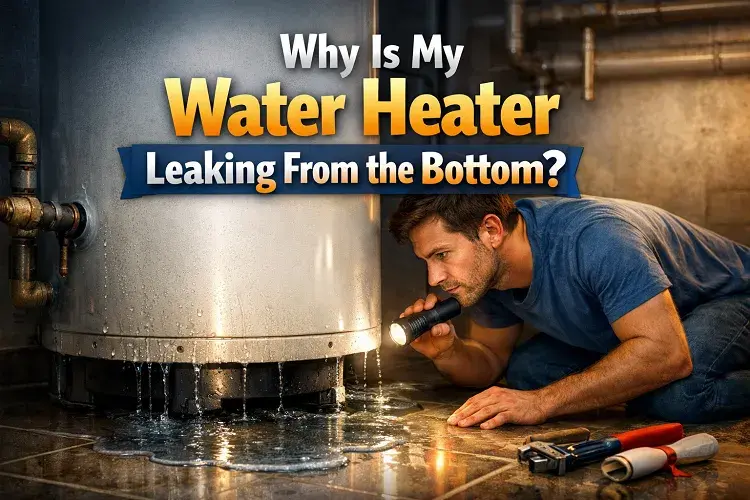
If you have just walked into your garage or utility closet and discovered a massive pool of water forming underneath your water heater, you are dealing with a severe plumbing emergency.
While a leak coming from the top of the unit is often a minor, repairable issue (like a loose pipe fitting or a faulty pressure valve), a leak coming from the bottom of the unit is a completely different story.
If water is actively leaking from the bottom of the tank, the internal steel tank has ruptured. It cannot be patched, and it cannot be repaired. The entire unit must be replaced immediately.
Here is the complete engineering breakdown of exactly why your water heater failed, and the critical steps you must take right now to stop the flooding.
Need an emergency replacement right now? Call our 24/7 Dispatch Network immediately: 📞 (833) 205-7332
Step 1: Stop the Flooding (Emergency Shut-Off)
Before you investigate why it broke, you must stop the water flow to prevent catastrophic damage to your drywall and flooring.
- Shut Off the Water: Look at the top of the water heater. You will see two pipes. One is the hot water output, and one is the cold water intake. The cold water pipe will have a valve on it (either a circular knob or a straight lever). Turn this valve clockwise (or perpendicular to the pipe) to shut off the water supply.
- Shut Off the Power (Electric): Go to your home’s main electrical panel and flip the breaker switch labeled “Water Heater” to the OFF position. If the heating elements are exposed to water, it creates a severe electrocution hazard.
- Shut Off the Gas (Gas Units): If you have a gas water heater, locate the gas dial near the bottom of the tank and turn it to the “OFF” position.
Once the water and power are shut off, call a licensed professional to drain the remaining 40 to 50 gallons of water sitting inside the broken tank.
Call our 24/7 Emergency Dispatch to get a truck to your house immediately: 📞 (833) 205-7332
Step 2: Why Did the Tank Rupture?
How does a solid steel tank suddenly burst open? The answer comes down to aggressive water chemistry and a tiny, often-ignored component called the Sacrificial Anode Rod.
The Anode Rod Failure
Inside your water heater is a long metal rod made of magnesium or aluminum. Because water naturally corrodes steel, this rod is designed to be “sacrificed.” The corrosive elements in the water will attack and eat away the magnesium rod instead of attacking the steel walls of your tank.
However, this rod completely dissolves after about 3 to 5 years. Once the anode rod is gone, the water immediately begins attacking the steel tank.
Sediment Buildup and Overheating
Furthermore, if you live in an area with “hard water” (like much of Texas), dissolved calcium and minerals constantly flow into your tank. When the water is heated, these minerals separate and fall to the bottom of the tank, creating a thick layer of rock-like sediment.
This sediment layer traps heat at the bottom of the tank. The intense, trapped heat essentially bakes the steel until it becomes brittle.
The Final Rupture
Between the corrosive water eating the steel from the inside and the trapped sediment baking the steel from the bottom, the structural integrity of the tank eventually fails. A microscopic pinhole develops, and the immense water pressure inside the tank violently forces water out through the bottom.
Step 3: Can a Bottom Leak Be Repaired?
No. Under no circumstances can an internal tank rupture be repaired.
You will find terrible advice on internet forums suggesting that you can use epoxy, sealant, or welding to patch a leaking water heater. Do not do this.
A standard residential water heater holds 50 gallons of scalding hot water under massive pressure. If you attempt to patch a rusted, compromised steel tank, the patch will fail. When it fails, the entire side of the tank can blow out, instantly flooding your home with 50 gallons of boiling water.
When a water heater leaks from the bottom, its lifespan is officially over. The only safe and legally compliant solution is to replace the unit.
Step 4: Upgrading Your System
When our dispatched professionals arrive to replace your ruptured tank, you can upgrade your home’s plumbing infrastructure.
- Tankless Water Heaters: Consider upgrading to a tankless (on-demand) water heater. Because they do not store 50 gallons of standing water, they physically cannot rupture and flood your garage the way a traditional tank can. They also provide endless hot water and use significantly less energy.
- Water Softeners: If your tank ruptured prematurely due to hard water sediment, our technicians can install a whole-home water softening system to protect your new water heater from the same fate.
When a water heater begins leaking from the bottom, it is not a minor plumbing issue—it is a catastrophic internal tank rupture that requires immediate intervention. Plumbing Repair Hub serves as your premier 24/7 emergency dispatch authority for failing water heaters. Because a rusted internal steel tank cannot be patched or repaired without risking a massive blowout of boiling water, our network connects you instantly with strictly vetted, state-licensed professionals equipped for full-system replacements.
We bypass the delays of corporate chains, dispatching rapid-response teams who understand regional water chemistry, sacrificial anode rod degradation, and hard water scaling. Our specialists arrive ready to safely shut off your gas and electrical hazards, extract the standing water, and replace your compromised unit with a high-efficiency tank or modern tankless system. Do not let 50 gallons of scalding water destroy your foundation and flooring. Rely on Plumbing Repair Hub for transparent, flat-rate pricing and immediate, localized emergency water heater replacement when minutes matter most.
Do not wait for the small leak to turn into a massive flood. Secure your property by calling our premier 24/7 emergency dispatch network.
Stop the Flooding Now. Call for Immediate Replacement: 📞 (833) 205-7332
Keep Reading: Don’t ignore a leak! This is often one of the main signs your water heater needs replacement. If you live in Florida, the leak might be related to the Miami hard water problem causing error codes.


