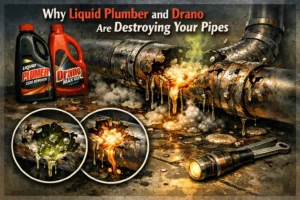
Is Drano bad for your pipes? Yes, chemical drain cleaners like Drano and Liquid Plumr are incredibly damaging to your plumbing system. These products rely on harsh chemicals like lye, sodium hydroxide, and bleach to dissolve clogs. When these chemicals interact with the blockage, they create a violent exothermic chemical reaction that generates extreme heat.
This intense heat can warp and melt modern PVC (plastic) pipes and rapidly accelerate corrosion and cracking in older cast-iron and galvanized steel pipes. Furthermore, if the chemical fails to clear the clog, it leaves a pool of highly toxic, burning acid sitting in your sink. For a safe solution, always rely on professional snaking or hydro-jetting.
Why Liquid Plumber and Drano Are Destroying Your Pipes (And What to Do Instead)
It happens to every homeowner: You are standing in the shower, and suddenly you realize the water is pooling around your ankles. Or you are washing dishes after dinner, and the kitchen sink simply refuses to drain.
A clogged pipe is incredibly frustrating. In a moment of desperation, most homeowners immediately drive to the local hardware store, grab a $7 bottle of liquid chemical drain cleaner (like Drano or Liquid Plumr), and pour the entire jug down the drain, hoping for a quick fix.
While the marketing on the bottle promises to “melt away tough clogs in minutes,” what the label doesn’t tell you is that those harsh chemicals are simultaneously melting away the structural integrity of your home’s plumbing system.
In this comprehensive guide, we are pulling back the curtain on the multi-million dollar chemical drain cleaner industry. We will explain the terrifying science behind how these liquids actually work, the catastrophic damage they cause to both new and historic homes, and the safe, professional alternatives you should be using instead.
The Science of Destruction: How Chemical Cleaners Work
To understand why these products are so dangerous to your home, you have to look at the ingredients list.
Most commercial drain cleaners are “caustic” or “oxidizing” agents. They are packed with incredibly aggressive chemicals like sodium hydroxide (lye), sodium nitrate, bleach, and aluminum flakes.
When you pour this toxic cocktail down a slow-draining sink, the chemicals eventually reach the clog—which is usually a dense mat of hair, congealed cooking grease, soap scum, and food particles.
When the lye and aluminum make contact with the water and the organic matter of the clog, it triggers an exothermic reaction.
The Heat Problem
An exothermic reaction is a chemical reaction that violently releases energy in the form of extreme heat. The liquid inside your pipes rapidly heats up to near-boiling temperatures in an attempt to literally burn and dissolve the clog away.
While this heat might dissolve a small ball of hair, the intense thermal energy is also transferred directly into the walls of your plumbing pipes. This is where the nightmare begins for homeowners.
What Drano Does to Different Types of Pipes
No matter what era your home was built in, chemical drain cleaners pose a massive threat to your infrastructure. Here is how that extreme heat damages different plumbing materials:
1. Melting Modern PVC (Plastic) Pipes
If your home was built or remodeled in the last 30 years, your drain lines are likely made of PVC (polyvinyl chloride) or ABS plastic. While these plastics are durable against water, they are highly sensitive to heat.
The near-boiling temperatures generated by a bottle of Drano can easily exceed the thermal rating of PVC. The plastic becomes soft, warps, and eventually deforms. More importantly, the heat melts the industrial glue holding the pipe joints and fittings together. Once that glue melts, your pipes will separate behind your walls, resulting in a catastrophic internal leak.
2. Corroding Cast-Iron and Galvanized Steel
If you live in an older, historic home, your plumbing system is likely built with cast-iron or galvanized steel pipes.
You might think that heavy metal pipes can withstand the heat of a chemical reaction, and you would be right. However, the problem with older metal pipes is corrosion. The harsh acids in chemical drain cleaners eat away at the protective oxidation layer inside the metal. If you use Liquid Plumr repeatedly, the acid will eventually eat a hole completely through the bottom of the cast-iron pipe, dumping raw sewage directly into your crawlspace or basement.
3. Destroying Porcelain and Stainless Steel
The damage doesn’t just happen behind the walls. If you have a slow-draining sink and the chemical cleaner pools around the drain before going down, the caustic acid can permanently etch, stain, and ruin the finish on expensive stainless steel sinks and porcelain toilet bowls.
(Note: You should NEVER pour chemical drain cleaners into a toilet. The shape of the toilet trap will trap the chemicals, causing the porcelain bowl to heat up and violently crack or explode.)
The “Toxic Soup” Trap
The absolute worst-case scenario happens when a chemical drain cleaner completely fails to clear the blockage.
Let’s say you have a massive clog caused by a small toy or an impenetrable block of hardened grease deep in the sewer line. You pour a bottle of Drano down the sink. The chemicals reach the clog, boil furiously, but fail to break through.
Now, your sink isn’t just full of dirty water—it is full of a highly toxic, burning, acidic soup that is actively eating away at your pipes.
When you finally realize the DIY fix didn’t work and you call a professional plumber, they are now forced to work in a hazardous environment. When they remove the P-trap under the sink to manually clear the clog, that burning acid will spill out, potentially causing severe chemical burns to their skin and eyes, and ruining your bathroom vanity cabinets.
The Safe Alternative: Professional Drain Cleaning
Plumbing systems were designed to handle one thing: water. They were not designed to be chemical laboratories.
If you want to clear a stubborn clog quickly, permanently, and safely, you must abandon chemical cleaners and rely on mechanical solutions. This is exactly what professional plumbers use to restore your pipes to factory condition without causing thousands of dollars in property damage.
1. Motorized Drain Snaking (Augering)
For standard clogs caused by hair or minor grease buildup, a plumber will use a professional-grade motorized drain snake. A durable metal cable with a cutting head is fed down the pipe, physically breaking apart the clog and pulling it out of the drain. It is 100% safe for your pipes and instantly solves the problem.
2. High-Pressure Hydro-Jetting
If your home is suffering from severe, recurring clogs or a main sewer line backup, hydro-jetting is the ultimate solution. A plumber feeds a specialized hose deep into your plumbing system and blasts water at 3,000 to 4,000 PSI (pounds per square inch).
This extreme water pressure acts like a pressure washer for the inside of your pipes. It safely cuts through impenetrable grease blocks, obliterates invasive tree roots, and washes away years of sludge, leaving your pipes looking brand new—all without using a single drop of toxic chemicals.
Stop Pouring Money (and Acid) Down the Drain
A $7 bottle of chemical drain cleaner might seem like a cheap fix, but when it melts your PVC pipes and causes a massive leak inside your walls, you will be facing thousands of dollars in drywall repair, mold remediation, and plumbing replacement costs.
Don’t risk your home’s infrastructure on a dangerous DIY gamble.
At Plumbing Repair Hub, our network of vetted, licensed professionals has the heavy-duty mechanical equipment required to clear your drains safely and efficiently.
Is your sink backing up right now? Put the bottle of chemicals down and call our 24/7 rapid dispatch hotline at (833) 205-7332 to get a licensed expert routed to your home immediately.
Keep Reading: Instead of using harsh chemicals, learn why professional drain cleaning matters for the lifespan of your plumbing. If your drains are constantly clogging, you might be dealing with cast iron pipe failure.


