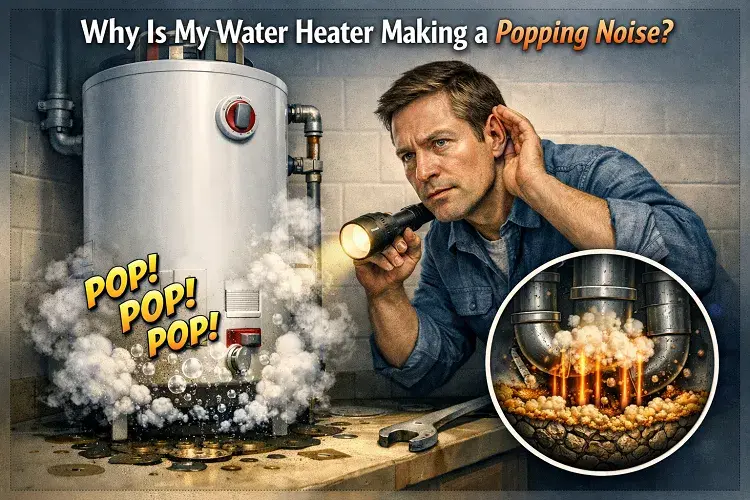
Why is my water heater making a popping noise? A water heater makes a popping or crackling noise when a thick layer of mineral sediment builds up at the bottom of the tank. The heating element is located beneath this sediment. When the heater turns on, water trapped beneath the hardened minerals begins to boil and bubble up through the sediment, creating a popping sound. This is a severe warning sign that your tank is overheating, which can lead to a ruptured tank and severe home flooding. If your water heater is violently popping, turn off the power and call a licensed plumber immediately.
Why Is My Water Heater Making a Popping Noise? (And When to Panic)
Your home should be a place of peace. So, when you walk past your utility closet or garage and hear your water heater making a loud popping, crackling, or knocking noise, it is completely normal to feel a sudden wave of panic.
It sounds like a pot of water violently boiling on a stove, or even worse, like popcorn exploding inside a metal tin.
If you are hearing this noise, do not ignore it. A popping water heater is not just an annoying sound; it is a mechanical distress signal. In this guide, we are going to explain exactly what is causing that terrifying noise, the hidden dangers it poses to your home, and the immediate steps you must take to prevent a catastrophic plumbing disaster.
The Culprit: Hard Water and Sediment Buildup
To understand why your water heater sounds like a percolating coffee pot, you first have to understand what is happening to the water supply entering your home.
In many parts of the United States, municipal water supplies deliver “hard water.” Hard water is simply water that contains high concentrations of dissolved minerals, primarily calcium and magnesium. While these minerals are perfectly safe to drink, they are an absolute nightmare for your home’s plumbing system.
When hard water enters your water heater tank, it is subjected to intense heat. This heating process causes the calcium and magnesium to separate from the water. Because these minerals are heavier than water, they sink and settle at the very bottom of the tank.
Over months and years, this loose mineral dust begins to harden and calcify, forming a thick, rock-like crust at the bottom of your water heater. This is known as sediment buildup.
The “Boiling Water” Effect
Here is where the popping noise comes into play. In a standard gas water heater, the gas burner is located directly at the bottom of the tank. In an electric water heater, the lower heating element sits near the bottom.
When a thick layer of rock-hard sediment covers the bottom of the tank, it acts as an insulator between the heat source and the water. The heat source has to work twice as hard to penetrate that thick layer of rock to heat the water above it.
During this process, small pockets of water become trapped underneath the sediment layer, directly against the scorching hot burner. Because this trapped water cannot circulate, it rapidly reaches the boiling point.
The popping, crackling, and knocking noises you hear are literally the sounds of boiling water bubbles violently bursting through the layer of rock-hard sediment.
Is a Popping Water Heater Dangerous?
The short answer is: Yes. A popping water heater is a major liability.
While a single pop here and there might just mean it is time for routine maintenance, a loud, continuous popping sound indicates that your tank is under immense stress. Here is what happens when you ignore sediment buildup:
1. Tank Rupture and Catastrophic Flooding
Your water heater tank is made of steel, which is coated in a thin layer of glass to prevent rusting. When the burner has to run constantly to push heat through the sediment layer, the bottom of the tank begins to severely overheat.
This intense, localized overheating causes the steel tank to expand and contract unevenly, which eventually cracks the protective glass lining. Once the glass lining is compromised, water touches the bare steel, causing rapid rust and corrosion. Eventually, the bottom of the tank will rust entirely through, instantly dumping 40 to 50 gallons of scalding hot water into your home.
2. Skyrocketing Energy Bills
Because the sediment is acting as a thick insulating blanket, your water heater has to burn significantly more gas or use far more electricity to heat the water to the desired temperature. If you have noticed a sudden, unexplained spike in your utility bills alongside the popping noise, sediment buildup is almost certainly the culprit.
3. Premature System Failure
The average lifespan of a traditional tank water heater is 8 to 12 years. However, if a tank is allowed to operate with a severe sediment problem, the constant overheating can fry the heating elements (in electric models) or crack the burner assembly (in gas models), effectively cutting the lifespan of your unit in half.
Can I Just Fix It Myself? (The Danger of DIY)
If you search the internet for solutions to a popping water heater, you will inevitably find DIY tutorials telling you to “simply hook a garden hose to the drain valve and flush the tank.”
While flushing a tank is standard maintenance, attempting to do it yourself when the tank is already making loud popping noises is highly discouraged and often dangerous.
Here is why you should never attempt a DIY flush on a severely popping tank:
- The Drain Valve Will Break: Most builder-grade water heaters are equipped with cheap plastic drain valves. If your tank hasn’t been flushed in years, those calcified rocks of sediment will get jammed inside the plastic valve when you try to drain it. When you try to close the valve, it won’t shut completely, leaving you with a permanent, unstoppable leak on your floor.
- The Sediment is Hardened: A simple garden hose flush only removes loose sediment. If your tank is violently popping, the sediment has already baked into a solid sheet of rock. A simple flush will not remove this hardened scale; it requires professional descaling chemicals or commercial-grade hydro-jetting.
- Scalding Hazards: You are dealing with 50 gallons of water heated to 120-140 degrees Fahrenheit. A broken valve or a slipped hose can result in third-degree burns in seconds.
When to Call an Emergency Plumber
If your water heater sounds like a percolating coffee pot, the time for preventative maintenance has passed. You are now in the damage control phase.
Continuing to run a severely popping water heater is a gamble. Every time the burner kicks on, you risk cracking the tank and flooding your home.
You need to take immediate action:
- Turn Off the Power/Gas: If you know how, turn the dial on your gas water heater to “Pilot,” or flip the breaker for your electric water heater. This stops the burner from continually boiling the trapped water.
- Call a Professional: You need a licensed, vetted professional to assess the damage. A master plumber can safely drain the tank, inspect the heating elements, and determine if the tank can be saved via a commercial descaling process, or if the internal glass lining is already compromised and requires a full replacement.
Don’t Wait for a Flood. Call Now.
At Plumbing Repair Hub, we understand that a failing water heater is a massive disruption to your life. You can’t shower, you can’t wash dishes, and you are terrified of your garage flooding.
That is why we offer 24/7 emergency dispatch. We connect you with top-rated, licensed plumbing contractors in your local area who can immediately diagnose your popping water heater. Our network professionals provide upfront, transparent pricing and guarantee their work.
Stop the popping before the tank bursts. Call our 24/7 dispatch hotline right now at (833) 205-7332 to get a licensed plumber routed to your home immediately.
Keep Reading: Hard water is the #1 cause of popping noises. Learn how hard water destroys water heaters and review the top signs your water heater needs replacement before it bursts.


