South Florida is no stranger to intense summer downpours, tropical depressions, and afternoon severe storms. But while a sudden torrential rainfall is common for Coral Springs residents, an unexpected plumbing symptom can turn a peaceful rainy day into a panic: your toilet starts bubbling, burping, or gurgling.
If you are watching the rain pour outside while listening to your toilet bowl make a rhythmic, hollow bubbling sound, you are receiving a critical warning from your sewer network. This isn’t a minor cosmetic issue, and it isn’t something that can be resolved with a plunger.
A bubbling toilet during a storm indicates a severe pressure imbalance or structural restriction hidden deep within your plumbing lines. If ignored, that bubbling sound is often the final warning sign before raw, hazardous municipal sewage backs up into your master bathroom or shower pans.
At Plumbing Repair Hub, we specialize in diagnosing storm-related mainline failures, localized blockages, and roof vent obstructions across Broward County. If your toilet is actively bubbling right now, do not run your washing machine or dishwasher. Call our local 24/7 Coral Springs emergency line immediately at (833) 205-7332 to get a certified sewer specialist to your door.
The Science of the Bubble: Air Pressure and Water Dynamics
To understand why a heavy storm makes your toilet bubble, you have to realize that your drainage system relies on a perfect, calibrated balance of air and water. Every time you flush, a volume of water rushes down the line, displacing air. If that air has nowhere to go, it pushes backward through the path of least resistance: your toilet’s water trap.
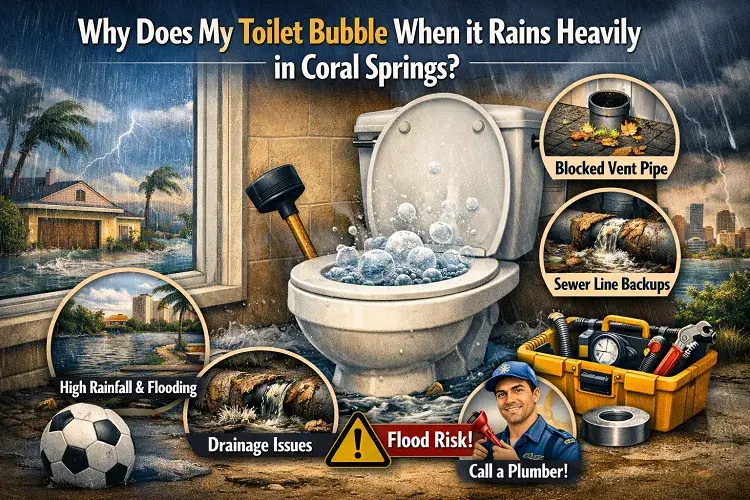
When a severe Coral Springs storm drops inches of rain in a brief window, three distinct environmental and mechanical failures can cause this pocket of air to escape violently through your toilet bowl:
1. Municipal Sanitary Sewer Surcharges (Inflow & Infiltration)
The City of Coral Springs operates a comprehensive utility network, but heavy rain puts immense stress on municipal infrastructure. In older neighborhoods or areas with aging underground piping, rainwater forces its way into the sanitary sewer lines through cracks, open cleanouts, or compromised manhole lids.
This process, known as Inflow and Infiltration (I&I), causes the city’s sewer mains to rapidly fill to maximum capacity with stormwater. As the main line fills with water, the air trapped inside the city pipe is compressed and pushed backward up your residential service lateral line. As this air forces its way through your home’s pipes, it escapes by burbling up through your toilet bowl.
2. Saturated Sandy Limestone Soil and Pipe Compression
Coral Springs is built on a foundation of sandy limestone soil. While this allows for decent superficial drainage, a prolonged downpour completely saturates the earth around your buried sewer line, causing the loose ground to expand, shift, and weigh heavily on older residential pipes.
If your home utilizes original cast iron or fragile clay pipes, this external soil weight can slightly misalign joints or compress areas already weak from internal corrosion, causing water to transit more slowly and air to displace backward.
3. Obstructions in Your Roof Vent Stack
Your plumbing system breathes through a vertical pipe called a vent stack, which exits through the roof of your home. Its job is to vent sewer gases into the atmosphere and draw air into the system to prevent a vacuum from forming when water flows.
In South Florida, our lush tropical canopy drops heavy leaves, palm fronds, and twigs onto our roofs. During dry weather, a partial blockage in your roof vent might not show obvious symptoms. However, when a heavy storm hits, the sudden volume of rain saturates the debris caked inside the vent, expanding it and sealing the top of the pipe shut. With the roof escape route completely blocked, the compressed air has only one option: it forces its way down through your home and out through the toilet.
Identifying the Danger Zone: Single vs. Multiple Fixtures
If your toilet is bubbling, performing a rapid, non-destructive diagnostic check can help you determine the severity of your plumbing crisis before calling our dispatch team.
The Single Fixture Test: If only one toilet in the house bubbles when it rains, but your showers, kitchen sink, and other bathrooms drain perfectly, you likely have a localized clog or a restricted vent pipe specific to that bathroom group.
The System-Wide Emergency: If your toilet bubbles, and at the same time, your shower drain starts gurgling or fills with murky water, you are dealing with a main sewer line restriction. The pipe leaving your home is completely overwhelmed by the storm, and a full-scale raw sewage backup is imminent.
Crucial Warning for Homeowners: If your toilet is actively bubbling during a rainstorm, DO NOT flush it to see if it works. If the line is backed up due to municipal pressure or a collapsed yard pipe, flushing will immediately cause the dirty water to overflow the rim, flooding your floors with biohazardous waste.
What to Do Next: Your Immediate Rainstorm Protocol
If the rain is coming down hard and your toilet is talking to you, follow these immediate safety containment steps to protect your property value:
Keep Reading: A bubbling toilet means your sewer line is flooded. This is one of the 5 most common plumbing emergencies in South Florida. You may also notice a flooded yard after a heavy storm.


