Living in South Florida means hurricane season is a built-in part of your yearly routine. From June to November, residents of Miramar diligently track the weather, buy bottled water, and test their storm shutters.
However, while you are busy protecting your windows and roof from high winds, you might be completely ignoring the most vulnerable part of your home: your plumbing system.
When a tropical depression or a Category 3 hurricane stalls over Broward County, it dumps massive amounts of water onto ground that is already completely saturated. The high winds cause power outages, and the torrential downpours push municipal infrastructure to the absolute breaking point.
The resulting damage to your residential plumbing can cost tens of thousands of dollars if you are not prepared. In this comprehensive guide, we will break down exactly how a hurricane affects your Miramar plumbing, why your toilets might back up after heavy rain, and the specific upgrades you need to make right now to protect your home from raw sewage flooding.
1. The Threat of the South Florida Water Table
To understand why Miramar homes are so susceptible to plumbing disasters during a storm, you have to understand the geography of South Florida.
Miramar, like much of Broward and Miami-Dade counties, is built very close to sea level. The “water table” (the level at which the soil is completely saturated with groundwater) is incredibly high. During the dry season, this is manageable. But during hurricane season, the ground simply cannot absorb any more water.
Saturated Soil and Crushed Pipes
When the soil becomes super-saturated during a tropical storm, it becomes heavy and shifts. If you live in an older Miramar home with aging cast iron or terracotta sewer pipes, this shifting, heavy mud puts immense pressure on your underground plumbing. The soil can literally crush brittle, older pipes, causing your main sewer line to collapse entirely.
Septic Tank Failures
If your home relies on a septic system rather than the municipal sewer, heavy rains are your worst nightmare. A septic system requires a dry “drain field” to filter and disperse wastewater into the ground. During a hurricane, the drain field floods. Because the ground cannot absorb the wastewater, it has nowhere to go but backward—straight up the pipes and into your bathtubs and ground-floor toilets.
2. Municipal Sewer Surges (The Raw Sewage Threat)
Even if your home is on the city sewer system and your pipes are brand new, you are still at massive risk during a hurricane.
When a storm dumps 10 inches of rain onto Miramar in a single afternoon, the municipal storm drains are quickly overwhelmed. This excess floodwater often breaches the sanitary sewer system (the system designed strictly for wastewater from toilets and sinks).
The Backflow Disaster
When millions of gallons of rainwater enter the municipal sewer system, the pipes reach maximum capacity. The pressure inside the city pipes becomes greater than the pressure inside your home’s pipes.
When this happens, the flow reverses. Instead of your wastewater flowing out to the street, the city’s raw, untreated sewage is pushed backward through your main sewer line, erupting out of your lowest drains, showers, and toilets. This biological hazard will destroy your drywall, ruin your flooring, and require professional biohazard remediation that can easily exceed 20,000 USD in damages.
3. Power Outages and Sump Pump Failures
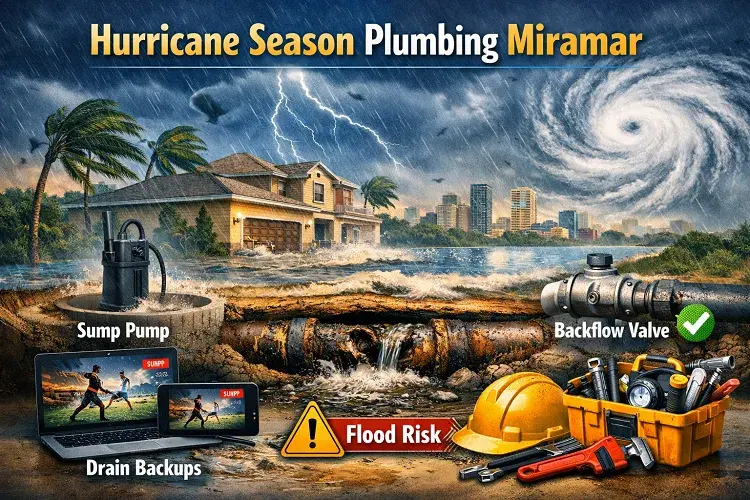
If you live in a low-lying area of Miramar and rely on a sump pump to keep groundwater out of your lower levels, a hurricane presents a terrifying double-threat: massive water volume combined with electrical grid failure.
When the high winds knock out the power grid in Broward County, your standard electric sump pump stops working immediately. Just as the heaviest rains begin to fall, your primary defense mechanism shuts down, guaranteeing that your home will flood.
How to Prepare: 3 Critical Plumbing Upgrades
You cannot control the weather, but you can control your plumbing infrastructure. To protect your Miramar home from catastrophic water and sewage damage this hurricane season, you need to call a licensed local plumber to implement these three upgrades:
Upgrade 1: Install a Backwater Valve
This is the single most important investment a South Florida homeowner can make. A backwater valve (or sewer backup valve) is a one-way mechanical flap installed directly into your main sewer line. Under normal conditions, the flap opens to let wastewater flow out to the city sewer. But if a hurricane overwhelms the municipal system and sewage attempts to flow backward into your home, the pressure forces the flap tightly closed. It completely blocks the city sewage from entering your property, saving your home from thousands of dollars in toxic water damage.
Upgrade 2: Install a Battery-Backup Sump Pump
Never rely solely on the Florida power grid during a hurricane. You must have a licensed plumber install a secondary battery-backup sump pump. These systems sit directly above your primary pump and feature a massive marine battery. The second the power goes out, the backup system automatically kicks on, ensuring your home continues to pump out floodwater even if the electricity is out for days.
Upgrade 3: Preventative Hydro-Jetting
If your main sewer line is already partially clogged with grease, hair, or tree roots, it will not be able to handle the stress of a heavy rainstorm. Before hurricane season begins, hire a professional plumber to perform high-pressure hydro-jetting. This service blasts the inside of your pipes with highly pressurized water, scouring them completely clean and ensuring your system is operating at maximum capacity before the storms hit.
Don’t Wait for the Storm to Hit
By the time the meteorologists name a hurricane and project its path toward South Florida, it is already too late to schedule a major plumbing upgrade. The time to prepare your home is right now, before the heavy rains begin.
If you are worried about your home’s vulnerability to flooding or sewage backups, trust Plumbing Repair Hub to connect you with top-rated, licensed plumbing professionals right here in Miramar. Our vetted experts can inspect your sewer line with a fiber-optic camera, install life-saving backwater valves, and provide transparent estimates for backup sump pumps.
Call (833) 205-7332 for Immediate Plumbing Help in Miramar, FL.
Frequently Asked Questions
1. Why is my toilet bubbling during a heavy rainstorm?
If your toilet bubbles or gurgles during heavy rain, it means the municipal sewer system is overwhelmed with stormwater and air is being trapped in the pipes. This is a severe warning sign that a sewage backup is imminent. You should stop using water immediately and call an emergency plumber.
2. Will a backwater valve lower my Florida homeowners insurance?
In many cases, yes. Because raw sewage backups cause incredibly expensive damage, many insurance providers in South Florida offer premium discounts to homeowners who proactively install a backwater valve. You should contact your insurance agent to confirm the exact discount.
3. What should I do with my water heater during a hurricane?
If you are ordered to evacuate Miramar, you should turn off the electricity or gas supply to your water heater, as well as the main water valve to your home. This prevents the tank from overheating or flooding your home if the pipes are damaged during the storm. Furthermore, a 50-gallon water heater can serve as an emergency supply of fresh drinking water if the municipal supply is compromised.
Keep Reading: Be prepared for the storm. Discover if Florida homes really need sump pumps, and what you must do if you wake up to a flooded yard after a storm.


