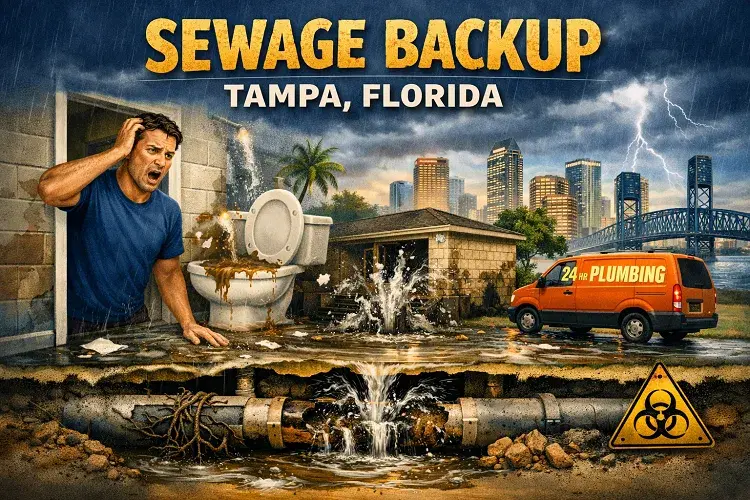
Tampa, Florida, is famous for its beautiful Gulf Coast views, but it is equally notorious for its sudden, violent afternoon thunderstorms and chronic flooding. When a massive storm system rolls off the Gulf of Mexico and stalls over Hillsborough County, the sheer volume of water fundamentally changes the ground beneath your home.
For most Tampa residents, heavy rain just means staying indoors. But if you have noticed that your toilets gurgle, your showers drain slowly, or worse, foul-smelling water backs up into your bathtub every time it pours outside, you are facing a massive plumbing emergency.
When your plumbing only fails during a rainstorm, it is a glaring red flag that your underground main sewer line has been compromised. In this guide, we will explain exactly why Tampa’s saturated soil is crushing your pipes, how flooded septic tanks fail, and why you must schedule a professional fiber-optic camera inspection immediately after the storm passes.
1. The Tampa Soil Problem: How Water Crushes Pipes
To understand why your drains only back up when it rains, you have to look at the soil composition in the Tampa Bay area.
Much of Tampa is built on a mixture of sandy soil and limestone with a very high water table. During the dry winter months, the ground is stable. But during the intense summer rainy season, the soil absorbs massive amounts of water. This water makes the soil incredibly heavy, causing it to shift and sink.
The Threat to Older Terracotta and Cast Iron Pipes
If you live in an older Tampa neighborhood like Seminole Heights or Hyde Park, your home’s original sewer line is likely made of terracotta (clay) or cast iron. These materials were the standard decades ago, but they have a fatal flaw: they are completely rigid.
When the heavy, water-logged soil shifts during a massive rainstorm, it puts immense downward pressure on these rigid pipes. Because the clay or cast iron cannot bend, it simply snaps under the weight.
The Mud Dam
Once a micro-fracture forms in your sewer line, the heavy rains wash thick mud and debris directly into the pipe. This mud creates a massive dam. When you try to flush a toilet inside your home, the wastewater hits the mud dam and has nowhere to go but backward—straight up into your ground-floor showers and bathtubs.
This is why the backup only seems to happen when it rains. The rain is literally pushing the mud into the crack in your pipe.
2. The Septic System Nightmare (When the Drain Field Floods)
While many homes in Tampa are connected to the city sewer system, thousands of properties on the outskirts of Hillsborough and Pasco counties rely on private septic tanks. If you have a septic system, heavy rain is your worst enemy.
A septic system relies on a “drain field”—a designated area of your yard where treated wastewater is slowly filtered and released into the dry soil.
When a massive Tampa thunderstorm dumps four inches of rain in a single afternoon, your drain field becomes completely flooded. Because the ground is totally saturated with rainwater, it cannot absorb any more liquid. The wastewater leaving your septic tank has nowhere to go.
As a result, the entire system backs up. The pressure forces the raw sewage backward, filling the tank to capacity and eventually erupting out of the lowest drains inside your house. If you smell raw sewage in your yard after a storm, or if your toilets refuse to flush, your drain field has likely failed.
3. The Root Intrusion Accelerator
If your yard features beautiful, mature oak trees, heavy rain can accelerate a hidden disaster.
During the hot, dry months, tree roots aggressively seek out moisture. If your sewer line has a tiny, hairline crack, the roots will force their way inside to drink the wastewater.
When the heavy rains finally arrive, the roots inside the pipe suddenly receive an explosion of water and nutrients. This causes the root mass to grow rapidly, expanding into a thick, dense web that completely chokes off the pipe. What started as a slow drain quickly turns into a total blockage, trapping all the wastewater inside your home.
Immediate Action: The Fiber-Optic Camera Inspection
If you experience sewage backing up after a heavy rainstorm, you must not ignore it. The mud and tree roots will not clear themselves, and the cracked pipe will eventually collapse entirely, resulting in a biohazard disaster inside your home that can cost over 15,000 USD to remediate.
The most critical step you can take is to call a licensed Tampa plumber to perform a Fiber-Optic Sewer Camera Inspection as soon as the rain stops.
How the Inspection Works:
A licensed professional will feed a high-definition, waterproof camera attached to a flexible fiber-optic cable directly into your main sewer line. This eliminates all guesswork. You and the plumber will watch the live video feed on a monitor, visually traveling through the pipe to find the exact location where the heavy soil cracked the pipe or where the tree roots invaded.
Drains Backing Up? Call Our 24/7 Dispatch Center to Schedule a Camera Inspection Today
The Modern Fix: Trenchless Sewer Repair
If the camera inspection reveals that the heavy Tampa soil has cracked your pipe, you do not necessarily have to dig up your entire yard to fix it.
Modern plumbing utilizes Trenchless Sewer Repair (specifically CIPP Epoxy Pipe Lining) to fix the pipe entirely underground.
- The plumber uses high-pressure hydro-jetting to blast the mud and tree roots out of the cracked pipe.
- A flexible, epoxy-saturated tube is pulled through the damaged pipe.
- The tube is inflated and cures into a brand-new, structurally sound plastic pipe right inside the old one.
This creates a seamless, flexible pipe that can easily withstand the shifting, waterlogged soil of the Tampa rainy season without ever cracking again!
Protect Your Home Before the Next Storm
Tampa’s rainy season is relentless, and a compromised sewer line is a ticking time bomb.
If your toilets gurgle, your drains run slow, or your bathtub fills with foul-smelling water during a storm, your underground pipe has already failed.
Trust Plumbing Repair Hub to connect you with top-rated, licensed plumbing professionals right here in the Tampa Bay area. Our vetted experts will perform a comprehensive fiber-optic camera inspection to diagnose the exact cause of your storm-related backups and provide transparent estimates for minimally invasive trenchless repairs.
Call (833) 205-7332 for Immediate Plumbing Help in Tampa, FL
Frequently Asked Questions
1. Why does my toilet only back up when it rains heavily?
If your plumbing only fails during heavy rain, it means your underground main sewer line has a crack or your septic drain field is flooded. Rainwater saturates the soil, creating heavy mud that pushes into the cracked pipe and creates a dam, forcing your household wastewater back into your home.
2. Can heavy rain crush my sewer pipes?
Yes. Older homes in Tampa were often built with rigid terracotta (clay) or cast iron sewer pipes. When the soil becomes supersaturated during a severe storm, the ground shifts and becomes incredibly heavy. This downward pressure easily snaps rigid, aging pipes.
3. What is the best way to stop roots from growing in my sewer line?
The only permanent way to stop tree roots from invading your sewer line is to eliminate the cracks in the pipe. Professional trenchless sewer repair creates a seamless epoxy lining inside the old pipe, completely sealing off the cracks so roots can never enter again.
4. How much does a sewer camera inspection cost in Tampa?
A professional fiber-optic sewer camera inspection in the Tampa Bay area typically costs between 150 USD and 350 USD. However, many licensed plumbers will credit the cost of the inspection toward any major repair work if they discover a broken pipe that needs to be fixed.
Keep Reading: Tampa isn’t the only city affected by rain. Learn why your toilet bubbles when it rains and read our comprehensive guide on the 5 most common plumbing emergencies in South Florida.


